

Charles Riva on Art as Strategy, Intuition, and the Long View of Meaningful Investment
[ad_1]
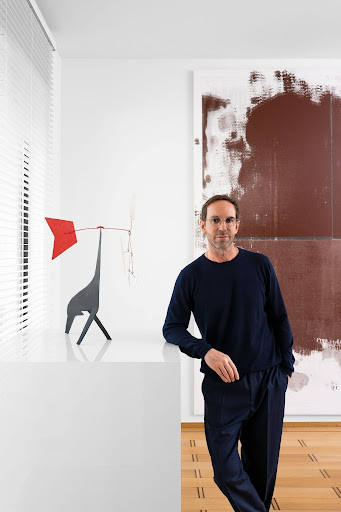
Charles Riva, founder of Charles Riva Collection and Riva Project, has made it his mission to connect cultural understanding with disciplined investment thinking through a perspective shaped by years of direct market experience. His work reflects a sustained effort to explain how art can be collected, valued, and transacted with purpose, offering insight that draws from both practice and reflection.
That perspective has roots in an upbringing where creativity was ever-present. Growing up with a painter as a mother and an architect as a father, Riva developed an early sensitivity to composition, space, and expression. This familiarity soon translated into action. By 16, he was already selling works from his mother’s studio, discovering an instinct for matching people with pieces that resonated on a deeper level. He says, “Sharing art with someone is about recognizing when something speaks to them and helping them understand why.” That early experience introduced a dynamic that would remain central to his work: the balance between emotional connection and informed judgment.
As his interest deepened, he moved into the professional sphere in Paris, working with a dealer in the secondary market. Handling works by major modern artists provided an understanding of pricing structures, collector behavior, and the factors that influence value over time. This period led to a pivotal decision. In his early 20s, he chose to establish his own gallery in New York City, embracing both the opportunities and responsibilities that came with independence. “You understand the market differently when every decision carries weight,” he states. “It becomes about reading situations in real time.” That shift marked the beginning of a more immersive engagement with the art world.
As his activities expanded in the early 2000s, Riva opened multiple gallery spaces across London and Paris, further deepening his involvement in the international art scene. The experience brought him into constant dialogue with artists, collectors, and institutions, while also exposing the operational demands behind exhibitions and art fairs. Over time, this immersion revealed patterns that extended beyond individual transactions. “I began to observe how certain works maintained relevance, how pricing evolved across markets, and how external factors could influence long-term value,” he shares.
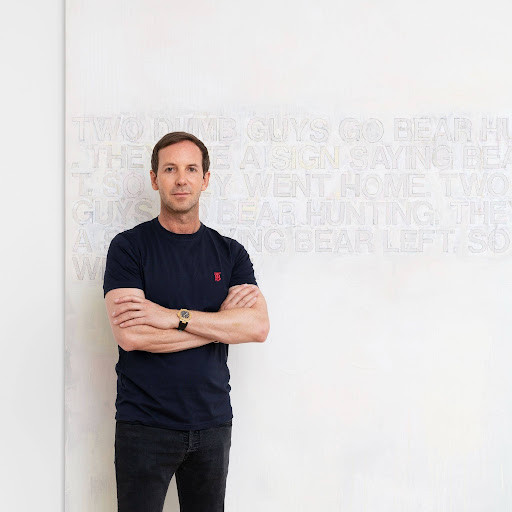
This evolving perspective became especially significant during the financial climate of 2008. Faced with changing conditions, Riva made the decision to step away from the traditional gallery model and focus fully on building his own collection. The shift reflected both a strategic recalibration and a more personal commitment to collecting. “There was a moment when I understood that building a collection offered a different kind of engagement,” he explains. “It allowed me to think long term and to construct something that evolves over time.” With this transition, his work began to move away from volume-driven activity and toward a more curated process.
The Charles Riva Collection in Brussels emerged from this turning point. Situated within a 19th-century townhouse, the space serves both as a private setting and a venue for curated exhibitions. According to Riva, the collection has grown into a substantial body of work. Riva likens it to an ongoing puzzle. “A collection is never finished,” he says. “Each piece brings you closer to understanding, and at the same time, it opens another direction.” This philosophy reflects a long-term view, where collecting becomes an evolving dialogue.
Alongside the collection, the Riva Project was established as a dedicated space for sculpture, extending his interest into the physical and spatial dimensions of art. This initiative aims to create an environment where works can interact across forms and themes, offering visitors a different way to engage with contemporary practice. Together, these spaces reflect an effort to make art accessible while maintaining a distinct curatorial vision, linking private collecting with a broader public experience.
As these projects developed, Riva’s presence also expanded internationally, with exhibitions organized across Brussels, Paris, New York, and Dubai. Riva notes that this global activity supports his role as both advisor and collector, allowing him to engage with diverse markets while maintaining a consistent framework for evaluating art. His perspective brings together cultural awareness and a structured understanding of transactions, particularly at higher levels of investment.
Within this context, his philosophy on art and investment becomes more defined. Riva views acquisitions through a dual lens, where cultural significance and financial logic inform each other. “When you acquire an important work, you are engaging with two dimensions,” he remarks. “There is the emotional connection, and there is the responsibility to understand its place within the market.” This perspective informs how he structures transactions, including models that allow shared ownership while maintaining flexibility.
Transparency plays a key role in this process. Riva places emphasis on clear pricing, verifiable data, and informed decision-making, particularly within the auction environment, which he considers an indicator of value. His focus remains on identifying moments where quality and pricing align, often requiring patience and careful observation. “Sometimes the best decision is to wait,” he stresses. “Timing is part of the strategy.” This disciplined approach reflects a broader understanding of how value develops over time.
At the same time, his outlook extends beyond financial considerations. For Riva, art holds a lasting cultural relevance that informs how individuals connect with it. “Art answers something essential. It reflects how we see the world and how we understand ourselves within it,” he states.
Throughout Charles Riva’s career, experience has remained a defining influence. Market cycles, shifts in collector behavior, and evolving artistic trends have all contributed to a nuanced understanding that continues to inform his work today. His writing and advisory efforts reflect a desire to share these insights with individuals who engage with art thoughtfully and with purpose.
[ad_2]
Source link