

Susan Collins reveals cause of shaking amid online scrutiny
[ad_1]
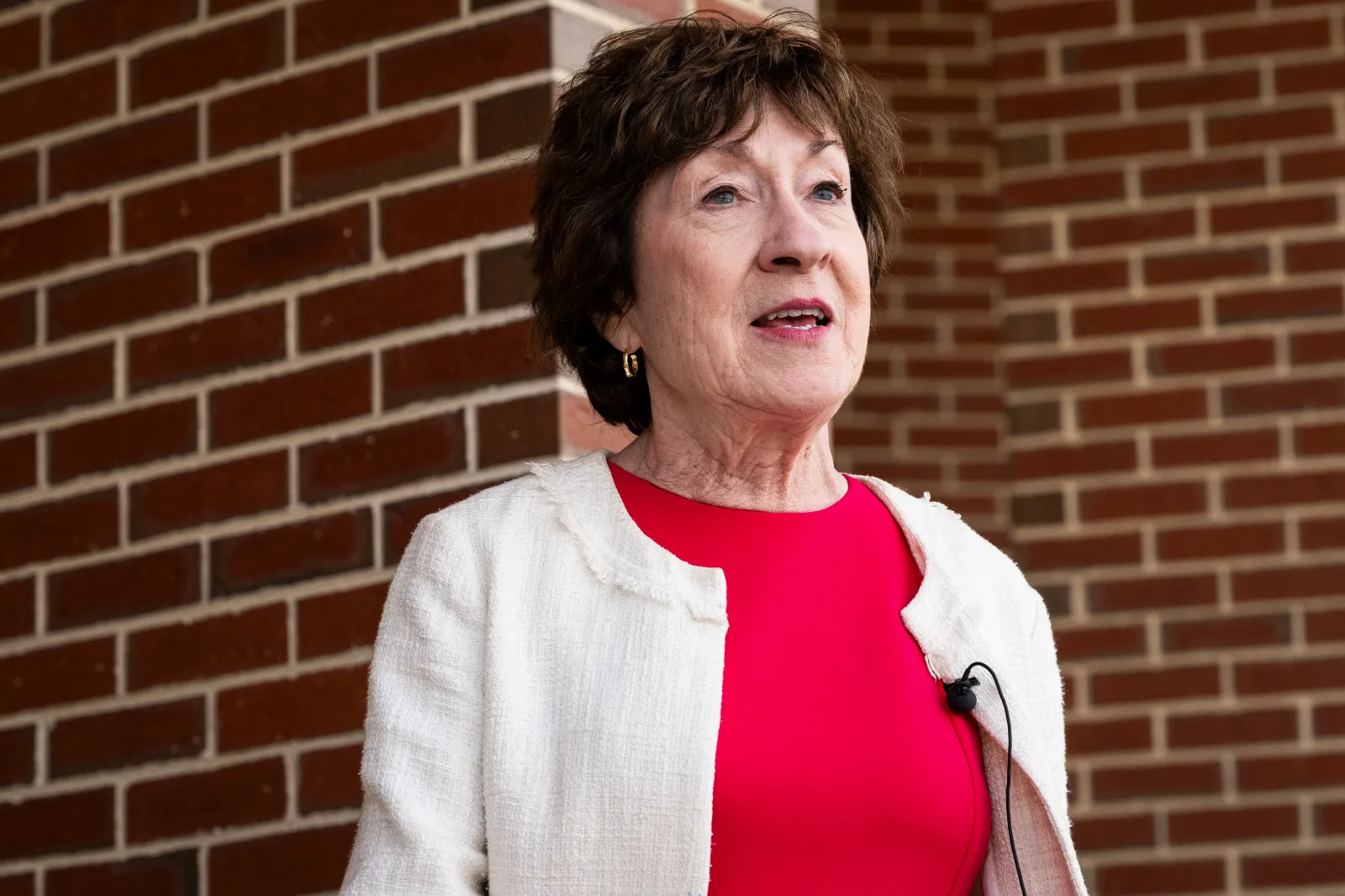
Senator Susan Collins has said the shaking seen in recent campaign videos is caused by a benign essential tremor, following days of online speculation about her health as she seeks re-election in Maine’s closely watched 2026 Senate race.
Collins’ age, health and long tenure in Washington have become part of a wider debate over aging lawmakers and could shape voter perceptions in a race central to Senate control.
Collins, 73, said the condition has not affected her work, while critics and political observers continue to scrutinize her campaign as Democrats look to Maine as a possible pickup opportunity.
The five-term senator revealed the condition in an interview with News Center Maine on Wednesday, saying she has had it “for the entire time” she has served in the Senate and that it has “absolutely no impact” on her ability to do her job.
“What I have is an extremely common condition that is called a benign essential tremor,” Collins said.
“If you talk to anybody in Washington, they will tell you that I am the hardest working person that they have ever worked with,” she added.
Newsweek has contacted a press representative for Collins for comment via email.
What Is Benign Essential Tremor?
Benign essential tremor is a common neurological condition, particularly among older adults. Around 1 in 20 people over 40 and 1 in 5 over 65 are affected, according to the National Institutes of Health.
Collins’ disclosure follows days of viral clips and commentary online focusing on her visible shaking, which has fed into a broader debate about the age of U.S. lawmakers and could shape one of the most competitive Senate races of the cycle.
Collins is running for re-election in 2026 against 41-year-old progressive challenger Graham Platner, in a race widely seen as both close and consequential. The Republican senator has represented Maine since 1997 and is the longest-serving Republican woman in the Senate.
Why It Matters
A victory in Maine is viewed as pivotal to Democrats’ hopes of regaining control of the Senate, and the party sees the race as one of its strongest pickup opportunities. Maine Governor Janet Mills, 78, ended her bid for the seat, leaving Platner—who has the backing of Senator Bernie Sanders and other progressives—as the presumptive Democratic nominee.
RealClearPolitics’ polling aggregate shows Platner with a 6.8 percent lead over Collins as of Thursday morning. In 2024, Maine backed former Vice President Kamala Harris by about seven points, and Democrats have made gains in special elections ahead of the midterms. All this means many Democrats believe Collins could face her toughest race yet.
Still, previous races have shown it is risky to count Collins out. First elected to the Senate in 1996, she has repeatedly won re-election even as Maine has voted for Democratic presidential candidates throughout her tenure.
How the Conversation Around Susan Collins Played Out Online
Collins announced her 2026 re‑election bid in February. Her post on X, viewed 4.9 million times, linked to a short YouTube video showing her unboxing New Balance sneakers and said, “This is perfect for 2026, because I’m running.”
Viewers noted visible shaking in her hands and a warble in her voice, prompting discussion online about her health.
The scrutiny intensified in early May, when the clip was widely reshared and drew further attention from political commentators. Some questioned her fitness for office, while others pointed to long-standing concerns about age and tenure in Washington.
Independent journalist Ken Klippenstein wrote in a widely viewed post that Collins appeared to be “vibrating,” while others pointed to her age and long tenure in office as part of a broader critique of Washington’s political class.
Older footage also came under the microscope, with commentators circulating past videos they said showed similar symptoms, further fueling online debate.
Speaking to News Center Maine, Collins pushed back, saying that the fact she had never missed a single vote was evidence she was “blessed with great health.”
Age Concern
The focus on Collins’ health reflects broader concerns about the age of the political class in Washington.
President Donald Trump will turn 80 in June. Former President Joe Biden left office at the age of 82, and questions about his age and fitness during the 2024 presidential election remained a political issue for Democrats.
But the trend extends beyond the presidency. Senator Chuck Grassley, an Iowa Republican and third in the presidential line of succession, is 92, and California Democratic Representative Maxine Waters is 87; she’s running for reelection this year. Three lawmakers died in office in 2025.
Concerns about aging lawmakers have helped drive calls for term limits or a mandatory retirement age. Earlier this year, Democrat Rahm Emanuel, 66, called for a ceiling of 75 for presidents, cabinet officials, members of Congress and federal judges. Senators serve six-year terms, but there are no federal limits on how long they can remain in office.
During her first Senate campaign in 1996, Collins pledged that if elected she would serve only two terms. Those remarks have resurfaced in recent days as critics question her decision to run again.
Public support for reforms appears strong. Eighty-three percent of Americans support term limits for Congress, according to a 2025 poll from McLaughlin & Associates, while polling from YouGov and the Economist has found broad support for maximum age limits across federal offices.
What Happens Next
Aging politicians are not unusual in Maine, which has one of the oldest populations of any state, with an average age of 44.8 in 2024 according to local government data.
While Collins’ disclosure may blunt speculation about her health, whether it reshapes voter perceptions in an already tight race remains unclear. The outcome will ultimately be decided in November.
In a polarized era, the center is dismissed as bland. At Newsweek, ours is different: The Courageous Center—it’s not “both sides,” it’s sharp, challenging and alive with ideas. We follow facts, not factions. If that sounds like the kind of journalism you want to see thrive, we need you.
When you become a Newsweek Member, you support a mission to keep the center strong and vibrant. Members enjoy: Ad-free browsing, exclusive content and editor conversations. Help keep the center courageous. Join today.


[ad_2]
Source link